
Last updated November 25, 2026
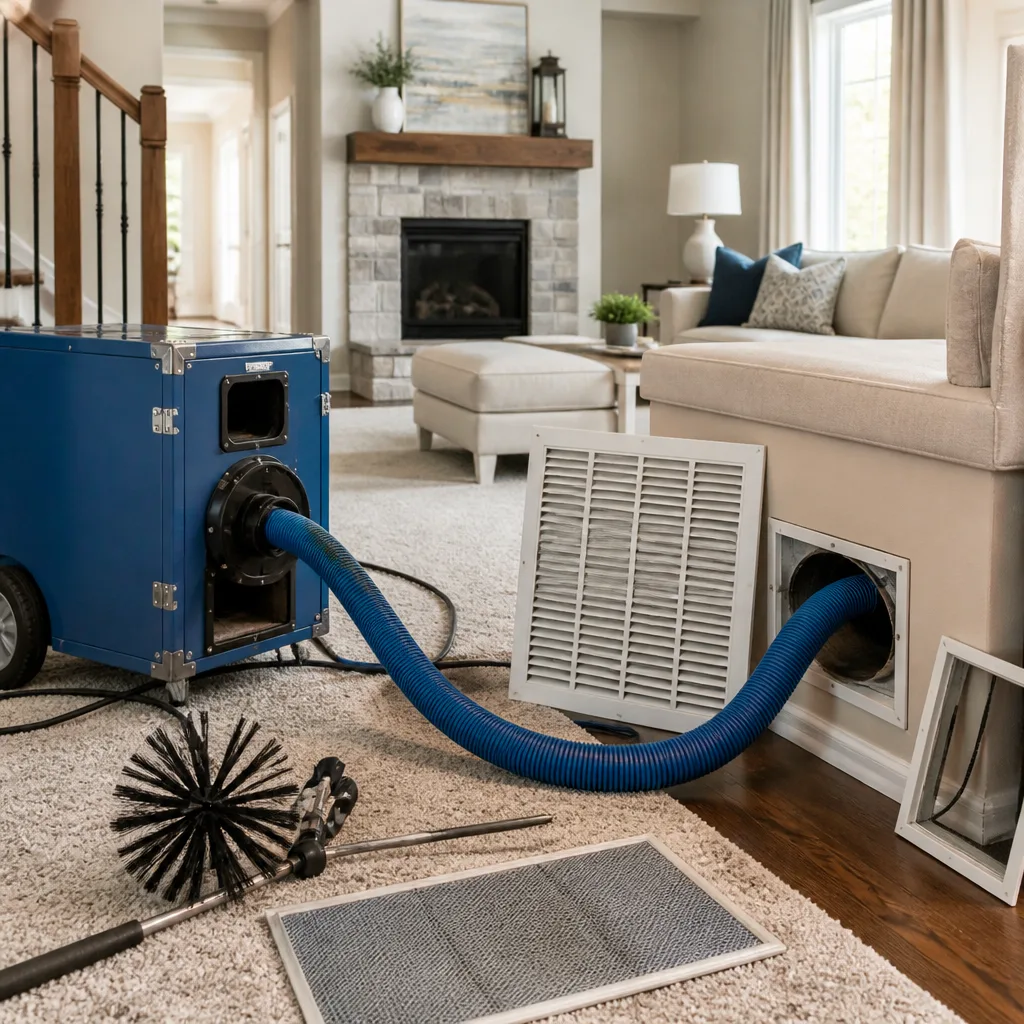 Whole-home duct cleaning
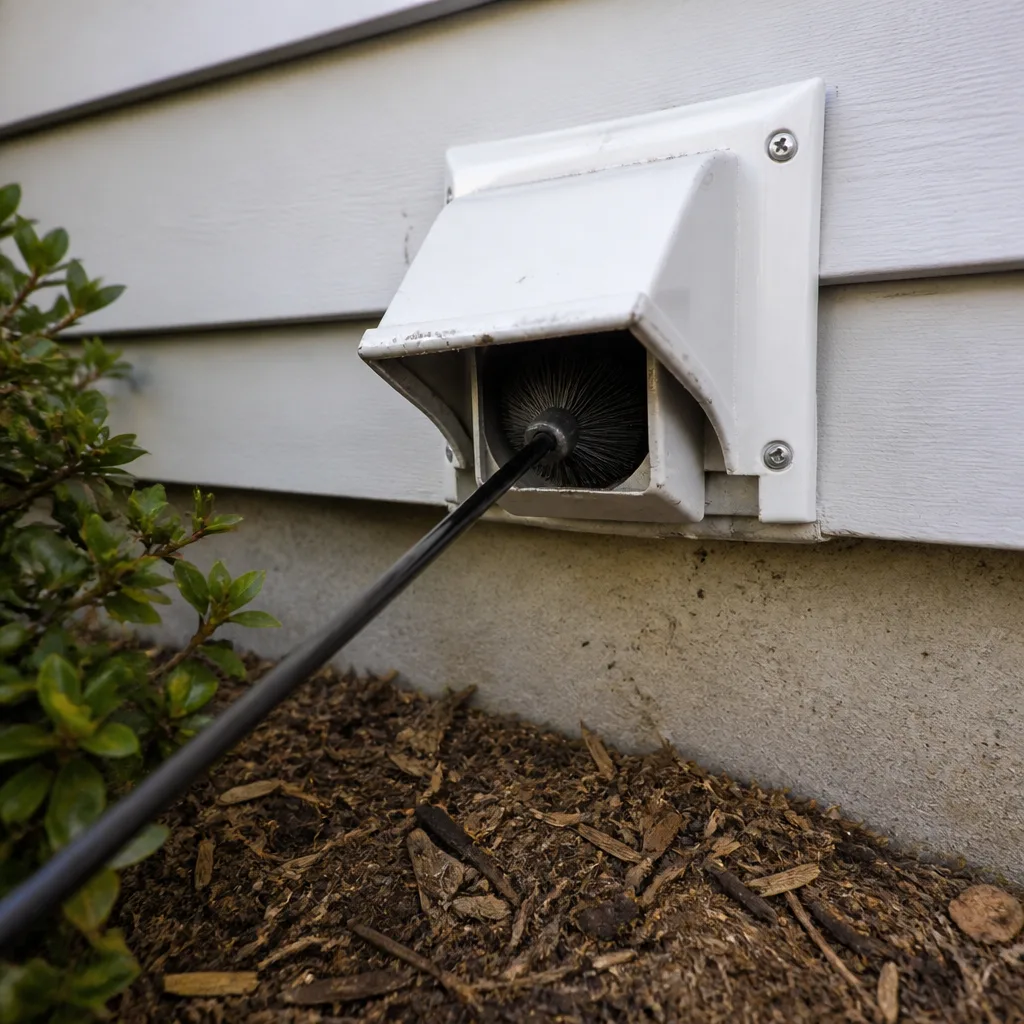 Dryer vent cleaning
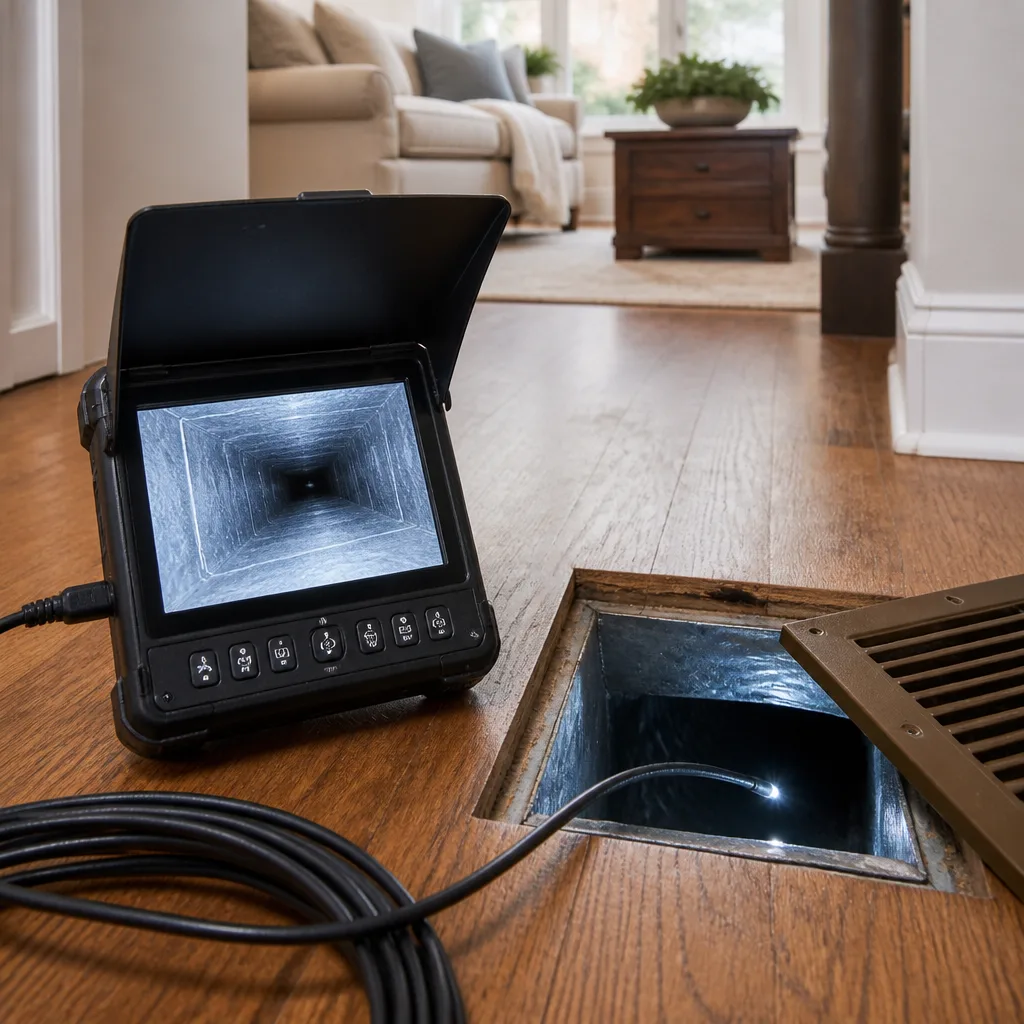 Camera inspection
 Sanitizing & deodorizing
Whole-system duct and dryer vent check with before-and-after photos - you see exactly what came out of your vents
That "$99 whole-house special" is a bait ad - the real number appears once they are in your hallway, or the "clean" is a shop-vac at the register. We photograph the inside of your ducts before and after instead.
Choosing the Right Air Duct Cleaning Brand: A Buyer’s Guide for Federal Way
Several national duct cleaning franchise names operate around South King County through independently owned units, and those units carry no standardized equipment requirement. The logo on the truck tells you almost nothing about the vacuum’s airflow, the technician’s training, or whether anyone will seal the leaks they find. Meanwhile, a small local operator with genuine commercial-grade equipment may look less “official” than the franchise next door. This guide teaches you to evaluate the company behind the brand rather than the name in front of it: what to ask about equipment, how to read reviews for signs of real full-system work, and why one company that can assess, clean, seal, and sanitize beats coordinating three vendors. Everything here is written for Federal Way homeowners and property managers who want the job done properly.
Quick Answer
The right air duct cleaning brand in Federal Way is the one that will name its equipment, explain its agitation and vacuum method, describe how it verifies results, and handle repair and sanitizing itself rather than handing you off. Brand names mean little in this trade; equipment transparency, verified training, and a full-system scope mean everything. Ask those four questions before you book, and you’ll separate real specialists from marketing.
Styles & brands we work with
- Whole-home duct cleaning
- Dryer vent cleaning
- Camera inspection
- Sanitizing & deodorizing
Table of Contents
- What “Brand” Actually Means in Duct Cleaning
- Franchise Unit vs. Independently Operated Company
- Equipment Transparency: The Trust Signal That Matters
- What NADCA Certification Requires and How to Verify It
- Reading Reviews for Signs of Genuine Full-System Work
- Why Assessment, Cleaning, Sealing, and Sanitizing Belong Together
- Questions to Ask Before You Book in Federal Way
- Common Mistakes to Avoid
What “Brand” Actually Means in Duct Cleaning
In most home services, a brand implies consistent standards, shared training, and a corporate system behind the name. Air duct cleaning mostly doesn’t work that way. A “branded” duct cleaning company is often a local operator who bought a name, a website template, and a phone number, then services jobs with whatever vacuum they own. Two companies under the same national name in the same county can run entirely different equipment and follow entirely different procedures.
That’s not a reason to avoid every branded company. It’s a reason to stop treating the name as evidence of anything. What actually determines the quality of a duct cleaning job in Federal Way comes down to a short list:
- The vacuum system. A truck-mounted or high-powered portable unit with enough airflow to keep debris suspended and capture it, versus a shop vacuum pushed through vents.
- The agitation method. Rotary brushes, air whips, or compressed-air tools that dislodge caked dust from duct walls, rather than a vacuum alone pulling at the surface.
- Containment. Negative-pressure setups that keep dislodged debris from blowing back into living spaces.
- The technician’s training. Someone who has been taught what a supply run, a return trunk, and a plenum look like from the inside, not just how to feed a hose.
- Verification. Photos of before and after, or a camera inspection, so you can see what was actually removed.
When you evaluate a duct cleaning company, ask about each of those five items directly. A company that can answer them in specifics is worth talking to. A company that deflects with “we use the best equipment available” is telling you something about how they’ll talk to you when the job doesn’t go smoothly. This matters whether you’re in Federal Way or anywhere in South King County, because the brand name on the door rarely changes what happens inside the ductwork.
Franchise Unit vs. Independently Operated Company
The practical difference between a franchise unit and an independent company in Federal Way isn’t quality; it’s accountability. A franchise unit answers to a corporate parent for brand standards, but the local owner sets equipment and staffing. An independent answers only to you and to their own reputation in the community. Each structure creates different incentives.
How to tell which one you’re calling
- Ask directly. “Is this an independently owned and operated location?” Most franchise units are required to disclose this. Note the answer.
- Check the website footer. Franchise sites usually carry the “each location independently owned” disclaimer somewhere in small type.
- Ask about equipment ownership. “Do you own your vacuum system, or rent it?” An independent who owns their Rotobrush or Nikro system tends to know its specifications cold.
- Ask who performs the work. A technician employed by the local operator, or a subcontracted crew booked through a call center?
- Look at the local footprint. Does the company name actual Federal Way neighborhoods, or use a generic “serving the Greater Seattle area” line with no local detail?
Why the distinction affects your job
Franchise units operate under performance metrics set by a corporate system, which can pressure them toward volume. Independents often have fewer jobs per week and can spend longer on each. Neither is guaranteed. But when a job requires real diagnosis – say, a return duct that keeps collecting dust because a supply line is leaking into the crawlspace – an independent who owns the repair capability has an incentive to find the problem, because their reputation depends on solving it. A franchise unit whose corporate scope stops at “cleaning” may simply refer you elsewhere. In Federal Way’s mix of older 1970s and 1980s housing alongside newer construction, duct layouts vary enough that diagnosis matters as much as cleaning.
Equipment Transparency: The Trust Signal That Matters
Ask any duct cleaning company in Federal Way what vacuum they use. The way they answer tells you almost everything. A company proud of its equipment will name it: Rotobrush, Nikro, Abatement Technologies, or a comparable professional brand. A company that describes outcomes (“we get all the dust out”) without naming tools is either unfamiliar with their equipment or avoids the question because the answer is underwhelming.
What each piece of equipment does
- Rotobrush systems. Rotating brush-and-vacuum tools purpose-built for residential duct interiors. They agitate dust off the duct walls while pulling it into a HEPA-filtered vacuum. Standard equipment for professional cleaning crews.
- Nikro systems. Commercial-grade vacuum units used in duct and industrial cleaning. Airflow capacity suited to whole-system work, not single vents.
- Abatement Technologies equipment. Known for containment and negative-pressure setups. When a crew uses this gear, dislodged dust doesn’t blow back into your living room during the job.
- Sanitizing products from Honeywell, Aprilaire, or Guardsman. Post-cleaning antimicrobial treatments for ducts and coils. The brand matters because the formulations are specified by HVAC engineers and allergists.
What to ask on the phone
- “What vacuum system and what CFM rating?” If they don’t know the CFM, that’s a warning sign.
- “What agitation method do you use? Brushes, air whips, or compressed air?” Any professional answer should name at least one.
- “Do you set up negative pressure or containment?” Yes is the right answer.
- “Will I get before-and-after photos of my ducts?” A professional crew documents its work.
- “Do you sanitize after cleaning, and with what product?” A brand name here is a good sign.
Specificity is the whole test. Federal Way homeowners who ask these questions on the first call routinely discover that half the quotes they’d collected came from companies who couldn’t answer a single one in technical terms. That’s not a knock on those companies’ salespeople; it’s what happens when the underlying operation is compressed into a phone script. The company that speaks the technical vocabulary is the company that owns the equipment and knows how to run it.
What NADCA Certification Requires and How to Verify It
NADCA is the National Air Duct Cleaners Association. It publishes assessment, cleaning, and restoration standards (often referenced as ACR, the Assessment, Cleaning, and Restoration standard) that define what a proper duct cleaning job should include. Certification is where things get confusing, because “NADCA certified” can mean several different things and companies rarely clarify which they mean.
The two levels of certification
- Company-level certification (ASCS). The Air Systems Cleaning Specialist credential is held by an individual, but a company can also be certified as an organization, requiring that at least one ASCS-credentialed person is on staff and that the business follows NADCA standards.
- Individual credential. A single technician or owner has passed the ASCS exam. That person may be the only person with the credential on a crew of five.
The distinction matters because company-level certification implies a system: training, standards, and quality control that apply to everyone doing the work. A single credentialed technician in an otherwise untrained crew is better than nothing, but it doesn’t guarantee the crew follows the standard on every job.
How to verify
- Ask the company directly: “Are you NADCA certified as a company, or is one person on staff credentialed?” Get the answer in writing, ideally on the quote.
- Check the NADCA member directory on nadca.com. Search the company name and location.
- Ask for the credentialed individual’s name and credential, then cross-reference.
- If they claim membership, ask which tier. Full membership and certification are different things.
A company that is honest about which level they hold is more trustworthy than one that inflates the distinction. In Federal Way, where a lot of duct cleaning marketing leans on the “NADCA” phrase without specifics, verifying is a five-minute exercise that separates the sincere operators from the ones quoting a badge they don’t hold.
Reading Reviews for Signs of Genuine Full-System Work
Reviews are the single most useful research tool for choosing an air duct cleaning company, but only if you read them for the right signals. Star ratings tell you a customer was satisfied with that particular transaction. Language tells you what the transaction actually involved. Scanning 20 reviews of Federal Way duct cleaning companies, you’ll spot two very different types of 5-star language.
Signals of genuine full-system work
- “They showed me photos before and after, and the difference in my return duct was obvious.”
- “They found a leak in my supply line in the crawlspace and sealed it before cleaning.”
- “Two techs, three hours, whole house. They didn’t rush.”
- “They pulled a huge amount of lint from my dryer vent and told me it hadn’t been done in years.”
- “They sanitized after cleaning and the musty smell in the hallway went away.”
- “They cleaned the blower and the coil too, not just the ducts.”
Signals of surface-only service
- “In and out in 45 minutes, didn’t disturb anything.” Fast is not thorough when it comes to whole-house ducts.
- “Price matched the coupon exactly.” Nothing wrong with an honest price, but a too-tidy outcome often means no diagnostic work happened.
- “They just ran the vacuum through each vent.” That describes a vacuum pass, not a cleaning.
- “They told me I didn’t need repair.” Maybe true. But if no one checked the seams, then no one actually verified it.
- “No mess at all.” A thorough cleaning disturbs debris. Perfect cleanliness on the floor can mean the job was shallow.
Read for verbs. “Vacuumed the vents” and “cleaned the entire system” describe very different hours of labor. Filter the reviews for what the customer actually watched happen, not how they felt about the price.
Why Assessment, Cleaning, Sealing, and Sanitizing Belong Together
Duct cleaning isn’t a standalone fix; it’s one step in resolving the air pathway. A cleaning job that leaves leaks in the supply trunk will let fresh dust pull into the system within weeks, and the homeowner sees the same problem return with no obvious cause. The same is true of sanitizing a system that hasn’t been cleaned first, or cleaning without checking the blower and coil for debris.
That’s the argument for a company that handles the whole scope itself. When one team walks a Federal Way home and can assess, clean, seal, and sanitize on the same visit, nothing gets lost in the handoff between vendors.
What the full scope looks like
- Assessment. Walk the system: returns, supplies, plenums, connections, HVAC components, and any visible leaks or gaps.
- Cleaning. Agitate the duct walls with brushes or air whips under negative pressure; capture the debris in a HEPA-filtered vacuum.
- HVAC cleaning. Blower, coil, and cabinet surfaces cleaned so the system stops redistributing dust from its own components.
- Duct repair and sealing. Gaps in flex duct joints, disconnected runs, and compromised seams sealed so the now-clean system stays clean.
- Sanitizing. Antimicrobial treatment applied to the ducts and components after cleaning, using products specified for HVAC applications.
- Verification. Before-and-after photos taken of the specific runs cleaned.
Very few duct cleaning companies offer all six steps. Many can clean; fewer can repair; fewer still offer air-quality sanitizing. That’s why coordinating multiple contractors is often a slower, more expensive path than starting with a company built for the full scope. If you’re in Federal Way and want the whole job handled in one visit, ask upfront what your quote includes. A quote that stops at “clean the ducts” and hands you a separate referral for the leak isn’t wrong, but it’s not the whole job. If you want the cleaning step handled as part of a full-system approach, our air duct cleaning work is scoped from the return vent to the register, with sealing and sanitizing available on the same call.
Questions to Ask Before You Book in Federal Way
Save this list. Ask them on the phone before anyone puts you on the schedule. A company that can answer all nine in specifics is a company to consider; one that stalls after the third question has told you what you need to know.
- “What vacuum system do you use, and what’s the CFM rating?” Any professional answer includes a brand name and a rough airflow spec.
- “What agitation method do you use?” Rotary brushes, air whips, or compressed-air tools. Anything vague is a pass.
- “Do you set up negative pressure?” The containment standard matters when the system is dirty.
- “Are you NADCA certified as a company, or is one technician credentialed?” Get a specific answer.
- “What’s included in the quote?” Cleaning of returns and supplies, blower and coil, and any vents in the count.
- “Do you sanitize? With what?” Honeywell, Aprilaire, and Guardsman are names to listen for.
- “Can you repair leaks if you find them?” The answer separates cleaning-only companies from full-system specialists.
- “Will I see before-and-after photos?” Documentation is standard for professional crews.
- “Is the price flat per system, or priced per vent?” Per-vent pricing lets final bills climb; flat per-system pricing doesn’t.
Ask the same questions of every quote you collect. The differences in answers will tell you more than the differences in price. Federal Way has plenty of duct cleaning options, and the calls are free. Ten minutes of questions sorts the field quickly.
Common Mistakes to Avoid
- Choosing on the lowest quote. A coupon price that becomes a much larger bill once the technician is on site is the industry’s most-reported complaint. Ask for a flat price per system, in writing, before you book.
- Assuming the brand name guarantees equipment quality. Two franchise units of the same national name can run entirely different vacuums. Ask about equipment on the specific call, not from the website.
- Skipping the repair question. Cleaning a system that has leaks means the same dust will be back within a season. In Federal Way’s mix of older and newer housing stock, leaks are common in flex duct joint work and in crawlspace runs, so ask whether the company can seal what they find.
- Accepting “NADCA certified” at face value. It can mean a company holds full certification or one technician passed an exam. Ask which.
- Believing the 45-minute job. A whole-house cleaning in a typical Federal Way home runs a few hours when done properly. Speed at that scale usually signals a vacuum pass rather than a clean.
- Forgetting the dryer vent. Clogged dryer vents are a documented fire risk. If your duct cleaning quote covers only the HVAC side, ask separately about dryer vent cleaning as its own service.
- Not seeing evidence. If a company doesn’t show you photos of what was removed, you have no way to verify the work was done beyond the invoice.
See the difference
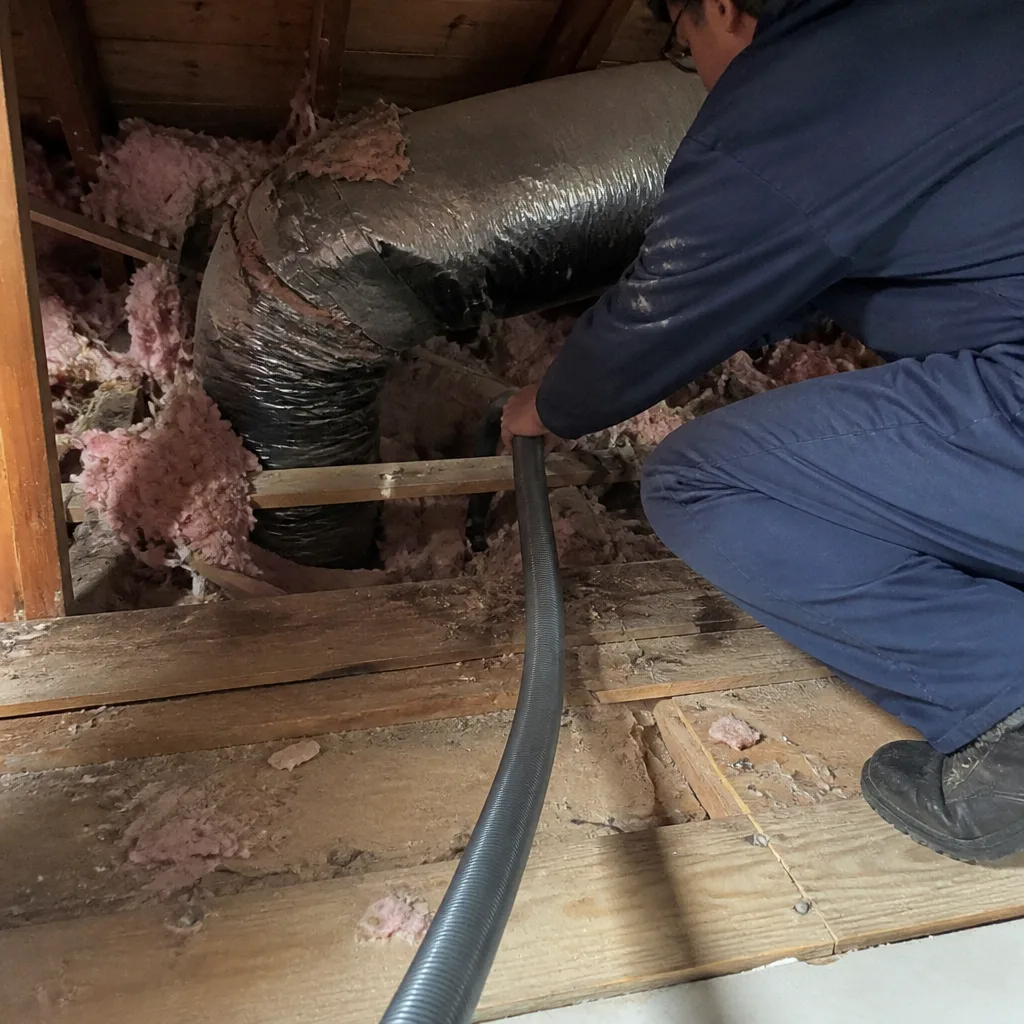 Before
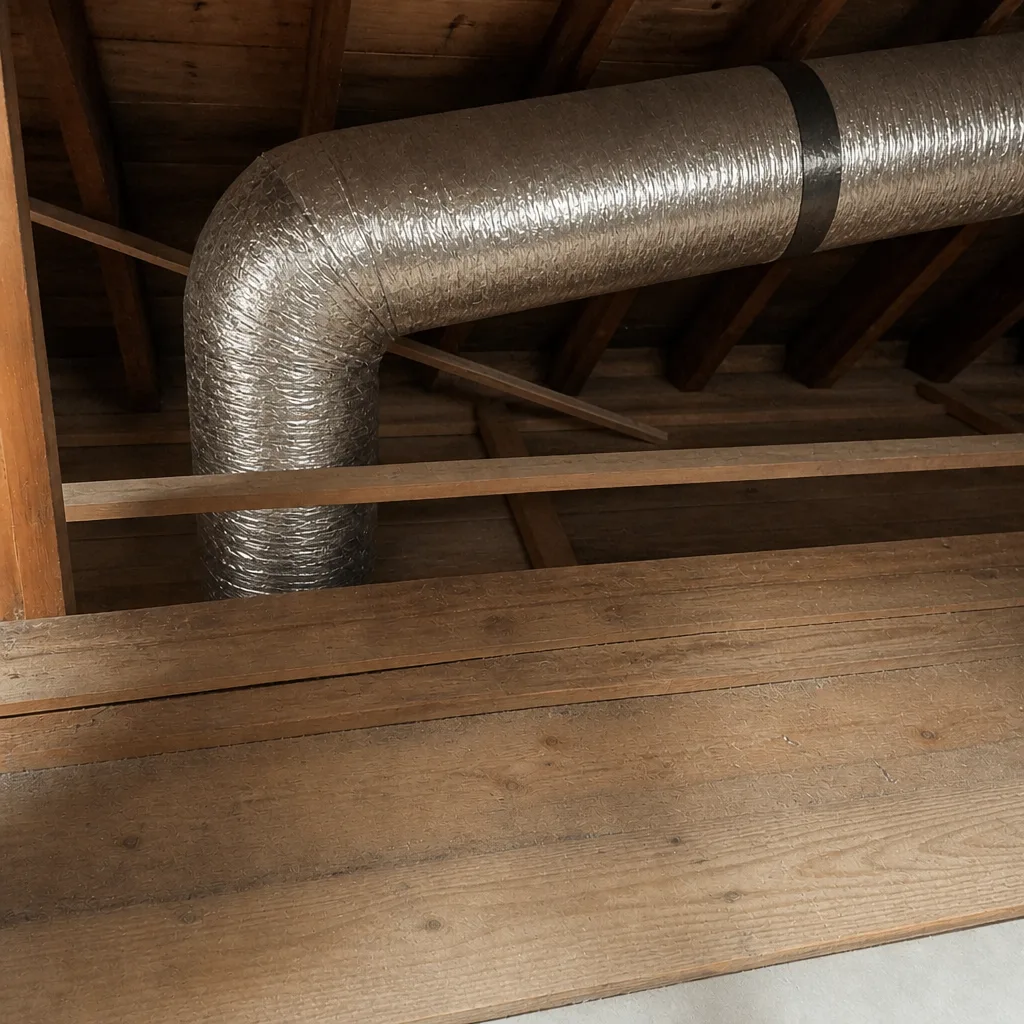 After
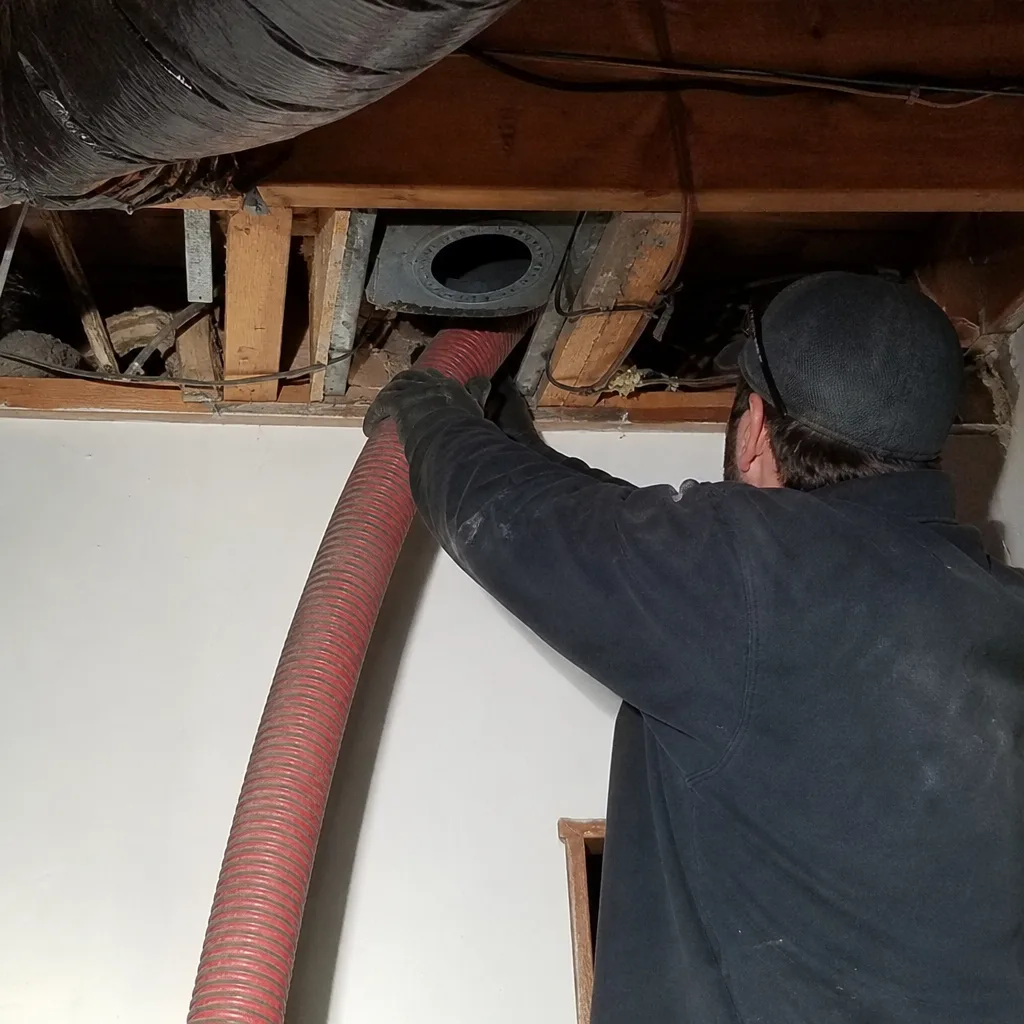 Before
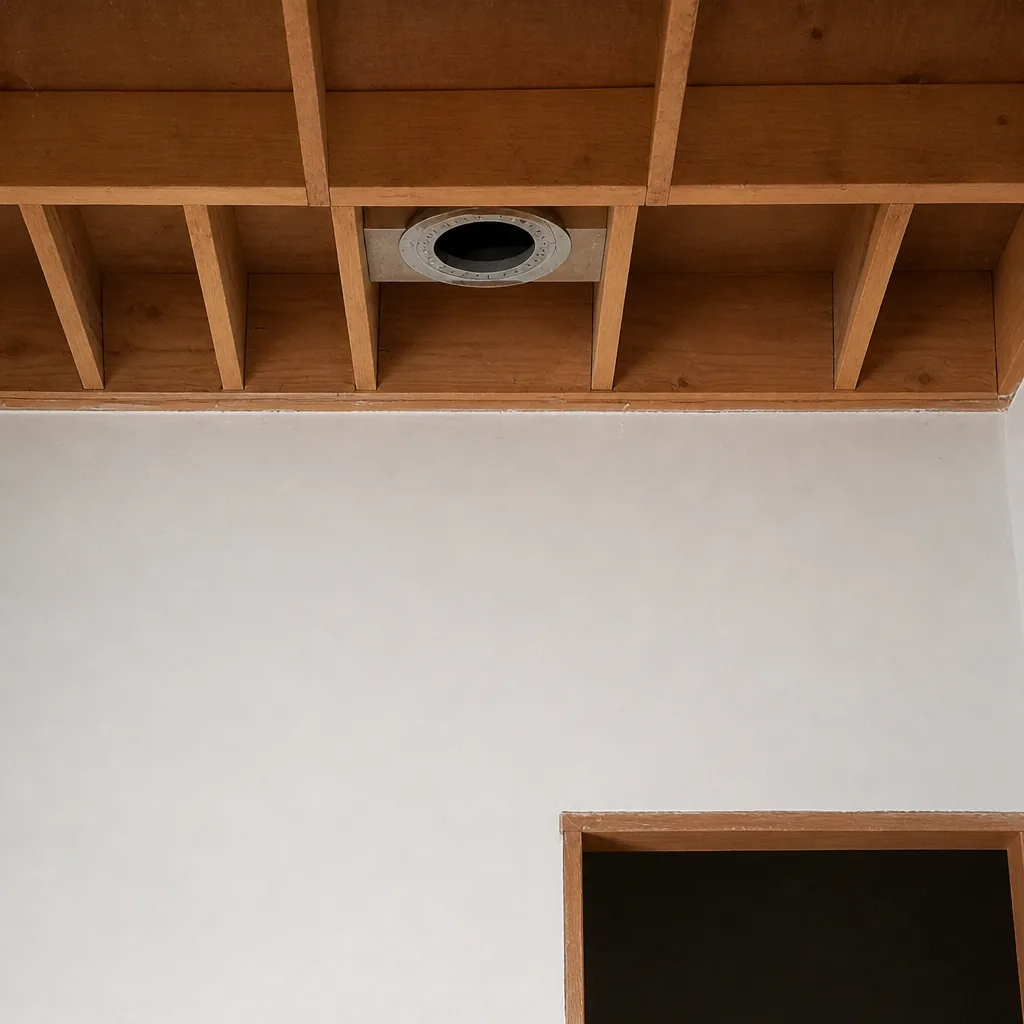 After
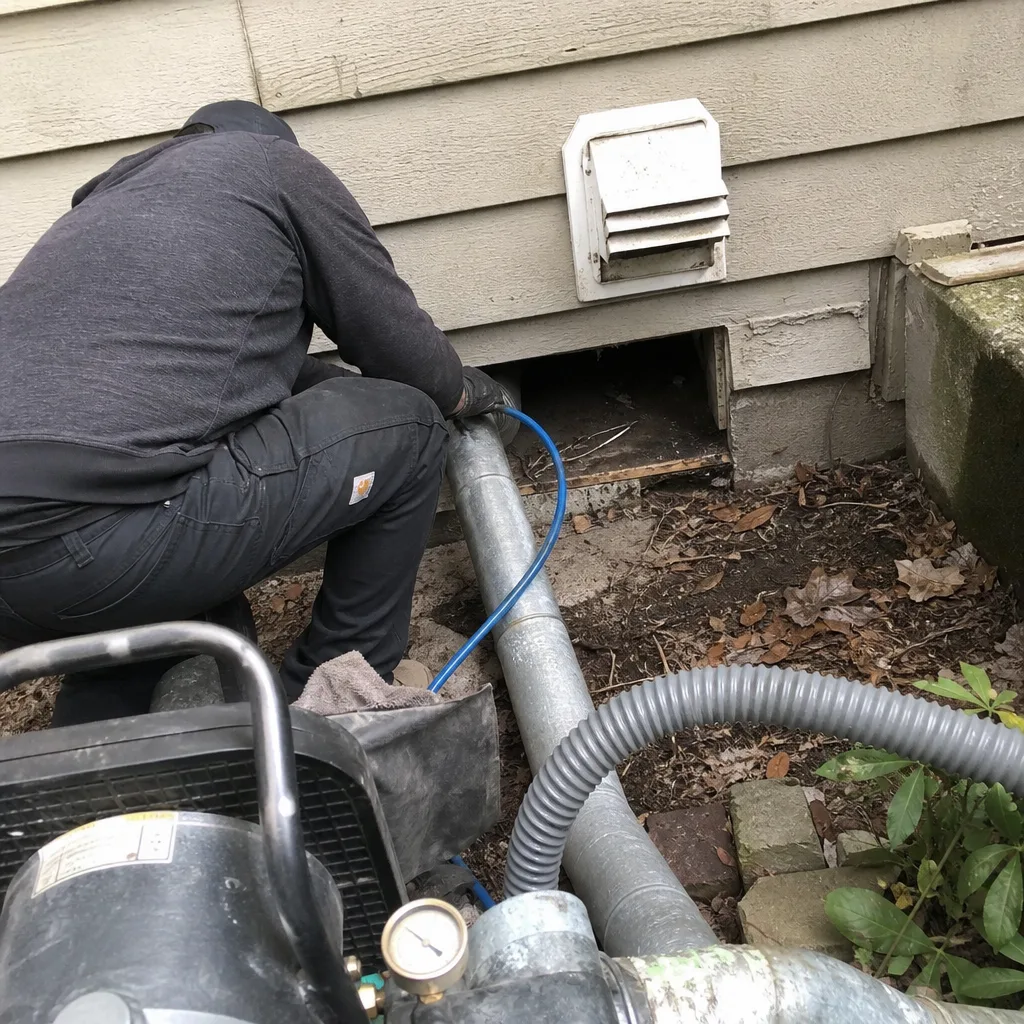 Before
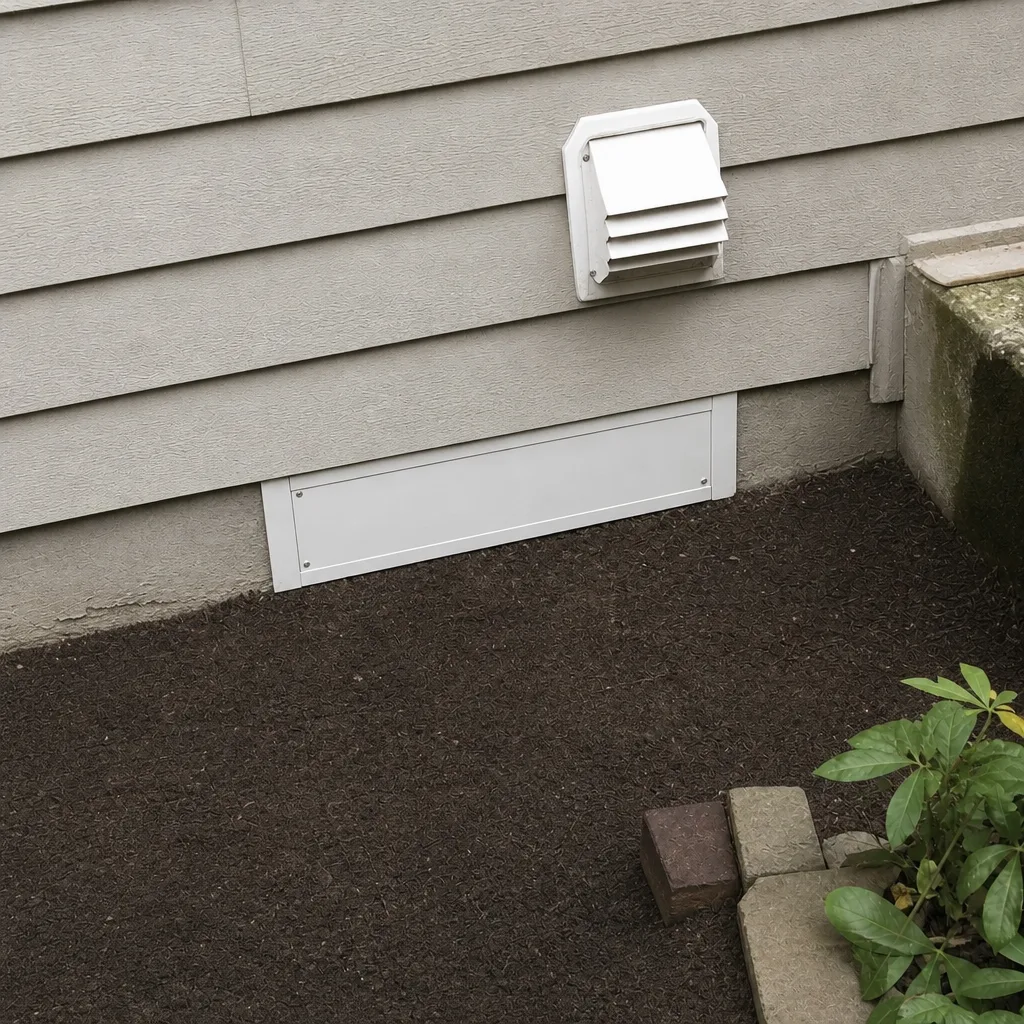 After
When to Call a Professional
Some duct problems are best caught early. If you’re seeing dust settling on surfaces faster than usual, noticing a musty smell that doesn’t clear with cleaning, or waking with allergy flare-ups that follow the HVAC cycle, a professional assessment is worth the call. If anyone in the household has asthma or respiratory sensitivity, or if you’ve recently renovated or moved into a home with unknown duct history, a full-system cleaning is the right starting point. If your dryer is taking longer than it used to dry a load, that’s a separate call to schedule a dryer vent review. Federal Way Air Duct Cleaning Pros offers free estimates in Federal Way – call (833) 482-5931. We answer 24/7. Fast dispatch from 7am to 7pm, Sunday through Friday.
Frequently Asked Questions
Typical whole-house air duct cleaning for a Federal Way single-family home is estimated based on the size of the system, the number of returns and supplies, and whether repair, HVAC cleaning, or sanitizing are added. The written estimate sets the final price, and we agree on a flat per-system figure before any work starts so you’re not surprised mid-job. Call (833) 482-5931 for an exact quote – estimates are free.
Cheaper quotes usually mean less equipment, less time, or both: a shop vacuum instead of a Rotobrush or Nikro system, no containment, no agitation, no photos, and a per-vent price that climbs once the technician arrives. A $99 teaser that becomes a several-hundred-dollar invoice is the pattern behind most complaints about the trade. Flat per-system pricing from the start is the honest structure. Call (833) 482-5931 for a written estimate on your actual system.
Before-and-after photos of your own ducts, taken during the visit, are the simplest proof. A camera inspection of a return run or a supply trunk shows the inside of the duct before cleaning and after. Any professional crew documents its work this way as a matter of course. If a company doesn’t offer photos, ask; if they don’t provide them, that tells you something.
For most Federal Way homes, every three to five years is a reasonable interval, though it depends on the system: homes with pets, recent renovations, or a history of visible dust buildup may need it sooner. A home with new ductwork or a recent full cleaning can go longer. The simplest rule is to schedule a review when you notice constant dust or a musty odor that doesn’t resolve.
For many households, yes: reducing the dust and debris that the HVAC system redistributes can reduce the airborne load your lungs deal with. But it’s not a standalone fix. If the ducts are clean and the coil is dirty, the system still puts dust into the air. That’s why a full-system scope that includes HVAC cleaning and sanitizing, with products from Honeywell or Aprilaire, tends to produce better results than a duct-only job. Call (833) 482-5931 to talk through your specific situation.
A company built for the full air pathway can handle all three: assessment, cleaning, duct repair and sealing, and sanitizing. That’s how we’re set up, because coordinating three vendors on a single job usually costs more time and money than starting with one company that can see the whole system. Every step is quoted in the written estimate before work begins. For Federal Way homeowners who want the whole job under one scope, call (833) 482-5931.
The Bottom Line
The brand on the truck is worth less than the answers on the phone. When you’re choosing an air duct cleaning company in Federal Way, judge on equipment transparency, verified certification, review language that describes real work, and a scope that covers assessment, cleaning, sealing, and sanitizing rather than a single pass with a vacuum. Ask the nine questions, request before-and-after photos, and require a flat per-system price in writing before anyone shows up. That screening separates a professional operation from a marketing front. Everything else is a logo.
The full-system approach we take at Federal Way Air Duct Cleaning Pros is built around that scope: cleaning with professional Rotobrush and Nikro equipment, HVAC component cleaning through our HVAC cleaning service, containment to Abatement Technologies standards, and post-cleaning sanitizing with Guardsman-grade products. Our technicians have up to 9 years of experience, and every job is quoted per system before work begins.
If you want a straight answer on what your system actually needs, call (833) 482-5931 for a free estimate. We answer 24/7. Fast dispatch from 7am to 7pm, Sunday through Friday.
Written by the team at Federal Way Air Duct Cleaning Pros.